

In every market, there are brands that sell excitement, brands that sell emotion, and brands that sell belonging. Then there are brands that sell something far more powerful and far more durable: understanding.
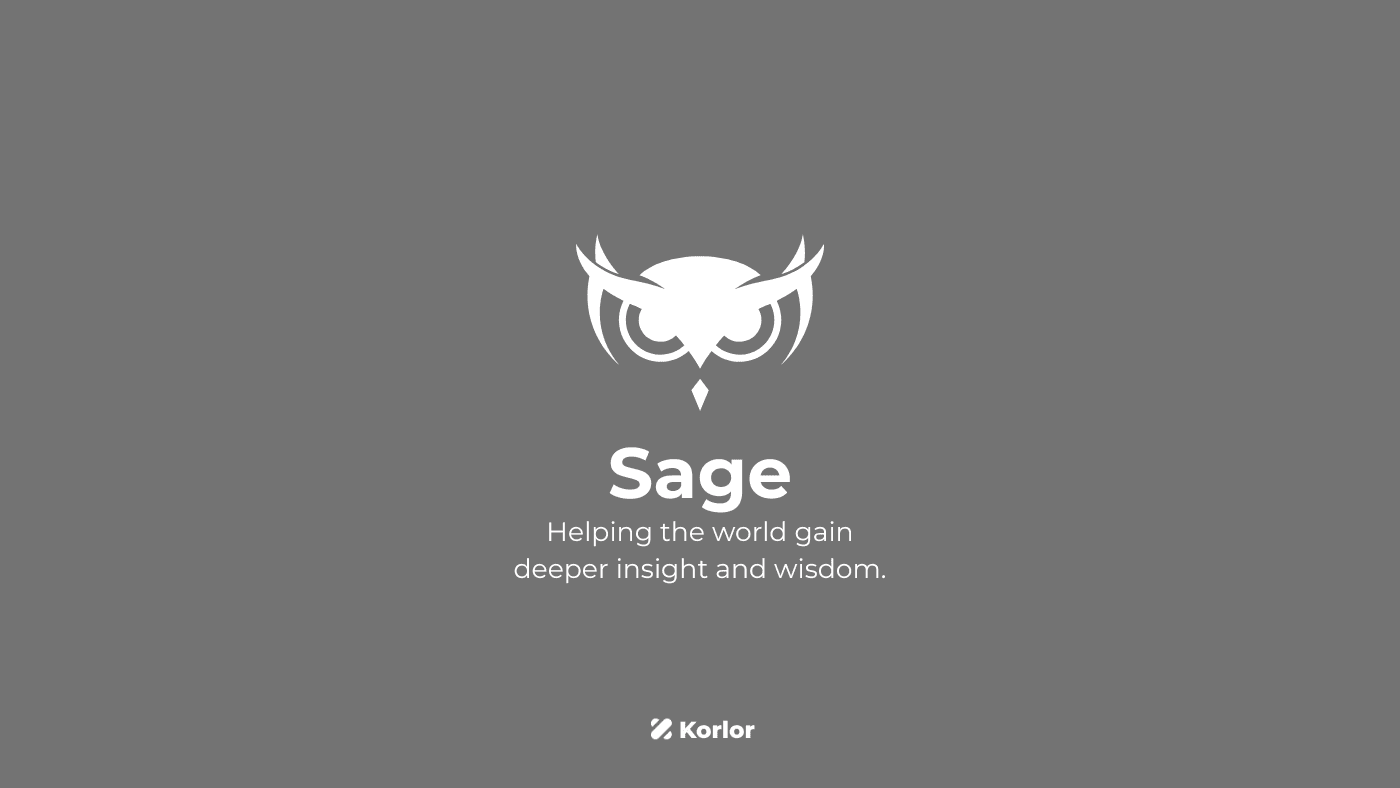
The Sage brand archetype exists for one primary reason. To seek truth, to share knowledge, and to bring clarity where there is confusion. Sage brands do not compete by being louder or flashier. They win by being right, by being trusted, and by helping people make better decisions.
In a world overwhelmed by opinions, misinformation, and shallow content, the Sage stands apart as the voice of reason. This archetype appeals to people who want to learn, who value accuracy, and who trust brands that explain rather than persuade. The Sage does not rush the audience. It respects intelligence. It rewards curiosity.
This is why Sage brands often become category leaders over time. They build authority slowly but deeply. When people are unsure, overwhelmed, or seeking answers, they turn to the brand that has consistently demonstrated wisdom, insight, and calm confidence.
The Sage archetype is not about appearing smart. It is about being genuinely informed, transparent, and helpful. When executed correctly, it creates one of the strongest forms of brand loyalty: intellectual trust.
In this guide, you will learn exactly what the Sage brand archetype represents, how it functions psychologically, how it shows up in brand identity, and how to apply it strategically across positioning, visuals, websites, and content marketing. This is not surface-level archetype theory. This is a practical, brand-building framework designed for long-term authority.
Meaning of Sage Brand Archetype
The Sage brand archetype represents wisdom, truth, knowledge, and clarity. At its core, the Sage exists to understand the world and to help others understand it too. Sage brands position themselves as guides, teachers, researchers, and trusted sources of insight.
Unlike archetypes driven by emotion or action, the Sage is driven by understanding. It values facts over hype, explanation over persuasion, and depth over speed. The Sage brand does not push people toward impulsive decisions. Instead, it empowers them to make informed ones.
A Sage brand believes that knowledge builds confidence and that clarity reduces fear. Its role is to illuminate complexity, organize information, and provide answers that stand up over time.
In branding terms, the Sage archetype communicates:
- Intellectual authority
- Calm confidence
- Transparency and honesty
- Thoughtful guidance
- Long-term credibility
This archetype attracts audiences who are skeptical of exaggeration and tired of noise. These people are not looking to be entertained. They are looking to understand.
The Core Purpose of the Sage Archetype
Every archetype has a central motivation. For the Sage, that motivation is truth.
The Sage seeks to:
- Discover what is true
- Separate fact from opinion
- Reduce uncertainty
- Help others see clearly
- Improve decision-making through knowledge
In branding, this purpose translates into education-first communication. Sage brands do not hide information behind vague language. They explain how things work, why choices matter, and what outcomes to expect.
The Sage archetype assumes that the audience is capable of thinking deeply. It does not talk down. It does not oversimplify to the point of distortion. Instead, it breaks down complexity into understandable steps without losing accuracy.
This purpose is why Sage brands often excel in industries where confusion is common and trust is essential. When people feel overwhelmed, they look for someone who understands the system and can explain it calmly.
How the Sage Strengthens a Brand’s Presence
The Sage archetype strengthens a brand by positioning it as a reference point rather than a competitor.
Instead of fighting for attention, Sage brands become resources. Instead of chasing trends, they build libraries of insight. Over time, this creates authority that competitors struggle to match.
Here is how the Sage archetype strengthens brand presence:
- It builds credibility before conversion: People trust Sage brands before they buy from them. The brand earns attention by providing value, not pressure.
- It reduces resistance: Clear explanations reduce fear. When people understand what they are buying or committing to, they feel safer.
- It attracts high-quality audiences: Sage brands attract thoughtful customers who value quality, accuracy, and long-term outcomes. These audiences tend to be more loyal and less price-sensitive.
- It supports long-term positioning: Trends change quickly. Knowledge compounds. Sage brands age well because their value increases over time.
- It creates intellectual leadership: A strong Sage brand becomes a source others reference, quote, and follow. This creates organic authority and visibility.
The Sage does not dominate through force. It leads through insight.
Why People Trust and Follow Sage Brands
Trust is not built through claims. It is built through consistency, clarity, and competence. The Sage archetype delivers all three.
Psychologically, people trust Sage brands for several reasons:
- They reduce uncertainty: The human brain is uncomfortable with ambiguity. Sage brands calm this discomfort by explaining what is happening and why.
- They signal intelligence and preparation: A brand that teaches clearly appears knowledgeable and prepared. People assume competence even before results are proven.
- They avoid manipulation: Sage brands rarely rely on urgency, fear tactics, or exaggerated promises. This absence of pressure increases trust.
- They respect the audience: By offering thoughtful explanations, Sage brands signal respect for the customer’s intelligence. This creates a balanced relationship rather than a power dynamic.
- They remain consistent over time: Sage brands do not change their message constantly. Their principles stay stable, which reinforces reliability.
Because of this, Sage brands are often chosen when decisions matter. Education platforms, consultancies, research-driven companies, health organizations, and strategic advisors frequently align with this archetype because trust is not optional in these fields.
The Psychology Behind the Sage Archetype
The Sage archetype operates primarily in the cognitive and rational areas of human psychology. While emotion still plays a role, it is secondary to understanding.
When people encounter a Sage brand, several psychological responses occur almost immediately.
The Need for Cognitive Safety
Cognitive safety refers to the feeling that information is accurate, reliable, and not misleading. Sage brands create this feeling by:
- Explaining processes clearly
- Using structured communication
- Avoiding sensational language
- Supporting claims with reasoning
This makes the audience feel mentally safe. They do not need to question every statement. They can relax and focus on learning.
Authority Without Intimidation
Unlike authoritarian brands, the Sage does not rely on dominance. Its authority comes from demonstrated knowledge.
This creates a unique balance:
- The brand feels confident but not arrogant
- Knowledgeable but not condescending
- Serious but not cold
This balance is why people willingly follow Sage brands. The authority feels earned, not imposed.
The Desire for Meaning and Understanding
Many purchasing decisions are driven by deeper needs than convenience. People want to understand what they are investing in, especially when the stakes are high.
The Sage archetype appeals to Analytical thinkers, Researchers, Professionals, Educators and Lifelong learners.
These individuals are motivated by clarity and meaning. They want to know not just what works, but why it works.
Trust Through Transparency
Transparency is a core psychological driver of trust. Sage brands explain limitations as well as benefits. They acknowledge complexity rather than hiding it.
This honesty creates a powerful effect: People believe Sage brands because they do not pretend to have all the answers.
Paradoxically, this restraint makes the brand more believable, not less.
Key Traits of a Sage Brand
How to Recognize a Sage Brand at First Glance
You can often identify a Sage brand within seconds of encountering it. Not because it demands attention, but because it feels composed, structured, and intentional.
A Sage brand typically communicates:
- Calm confidence
- Intellectual clarity
- Minimal distraction
- Purposeful design
There is no rush. No clutter. No emotional overload. Everything feels deliberate.
Core Traits of the Sage Archetype
Below are the defining traits that consistently appear in strong Sage brands.
Calm
Sage brands never feel frantic. Their communication is measured, steady, and reassuring. This calm tone signals control and understanding.
Confident
Confidence in a Sage brand comes from knowledge, not volume. It does not need to prove itself aggressively. The depth of insight speaks for itself.
Well-Researched
Sage brands show evidence of thinking. Their content feels considered. Their explanations feel informed. Even when simplified, the underlying structure is solid.
Objective
While no brand is perfectly neutral, Sage brands strive for fairness and accuracy. They present information clearly and allow the audience to draw conclusions.
Clarity-Driven
Every message serves a purpose. Sage brands avoid unnecessary language and focus on helping the audience understand one clear idea at a time.
Truth-Oriented
The Sage values what is accurate over what is popular. This commitment builds long-term respect.
Sage Brand Archetype in Communication
Tone of Voice
The Sage tone of voice is thoughtful, grounded, and composed. It feels like a trusted expert explaining something complex in a way that makes sense.
Key tone characteristics include:
- Steady pacing
- Clear explanations
- Respectful language
- Confident but humble phrasing
A Sage brand sounds like someone who has studied the subject deeply and is comfortable sharing what they know without ego.
Messaging Style
Sage messaging focuses on:
- Education
- Explanation
- Context
- Reasoning
Instead of saying: “This is the best solution.”
A Sage brand says: “Here is how this works, and here is why it is effective.”
This difference matters. One persuades. The other empowers.
Sage Brand Archetype in Brand Identity
A Sage brand is not built through words alone. Its authority is reinforced through every visual and experiential decision the brand makes. When the Sage archetype is executed correctly, the brand feels intelligent before a single sentence is read. This is because the identity itself communicates clarity, structure, and restraint.
A true Sage brand feels aligned at every touchpoint.
The Sage Brand appears Thoughtful, Wise, and Grounded Communication
The Sage brand voice feels like a conversation with someone who has studied the subject deeply and has no need to impress you. There is no rush. No exaggeration. No dramatic framing.
Key characteristics of the Sage voice include:
- Thoughtful pacing
- Clear sentence structure
- Neutral but confident language
- Explanations that build logically
- Respect for the reader’s intelligence
The Sage voice avoids emotional extremes. It does not rely on hype, urgency, or dramatic persuasion. Instead, it creates trust by being consistent, composed, and informative.
Sage Brand Writing Style
Sage brands often write in a way that feels instructional without being rigid. They explain concepts step by step and guide the reader through ideas in a logical sequence.
Effective Sage writing:
- Defines terms clearly
- Avoids unnecessary jargon
- Explains why something matters before selling it
- Prioritizes accuracy over excitement
The goal is not to sound academic. The goal is to sound reliable. When people read Sage brand content, they should feel smarter, calmer, and more confident afterward.
Common Words and Language Use by the Sage Brand
Sage brands naturally gravitate toward language that reflects clarity and understanding. Examples include:
- Insight
- Framework
- Process
- Research
- Evidence
- Perspective
- Understanding
- Context
- Analysis
- Long-term
These words reinforce the archetype without feeling forced. They align with the deeper promise of the Sage: to help the audience see clearly.
Visual Identity of a Sage Brand
Simplicity
Sage brands use simplicity not because they lack creativity, but because clarity is more important than decoration. Every visual element serves a purpose. Nothing exists just to fill space.
Simplicity in a Sage brand communicates:
- Confidence
- Focus
- Discipline
- Maturity
Crowded visuals create noise. Noise creates doubt. Sage brands eliminate noise.
Color Strategy for Sage Brands
While Sage brands are not limited to one color, they often favor palettes that support calm thinking and intellectual trust.
Common color tendencies include:
- Muted tones
- Neutral palettes
- Cool or balanced colors
- Low saturation
- Minimal contrast
Blues, greys, soft greens, off-whites, and earth tones are common because they support focus and reduce emotional intensity.
Bright or aggressive colors can undermine the Sage archetype if they introduce unnecessary stimulation.
Typography
Typography plays a major role in how intelligent a brand feels.
Sage brands often use:
- Clean serif fonts for authority and tradition
- Modern sans-serif fonts for clarity and readability
- Generous line spacing
- Clear hierarchy
Typography should never feel playful or chaotic. It should feel intentional and easy to follow. The reader should never struggle to read or understand.
Well-chosen typography reinforces the idea that the brand values structure and thoughtfulness.
Layout and Design Structure
Sage brand layouts feel organized and predictable in a positive way. The user always knows where to look next.
Design characteristics include:
- Strong alignment
- Clear sections
- Consistent spacing
- Logical content flow
- Minimal visual clutter
This structure mirrors the Sage mindset. Information is organized, not scattered. Ideas build on each other rather than competing for attention.
The Sage Customer Experience
For Sage brands, customer experience is part of the brand’s credibility. If the experience feels confusing or inconsistent, the promise of clarity collapses.
Every interaction should feel:
- Considered
- Thought through
- Purposeful
- Easy to navigate
From onboarding to customer support, Sage brands focus on reducing friction and answering questions before they are asked.
Education – First Touchpoints
Sage brands educate at every stage of the customer journey.
Examples include:
- Clear onboarding guides
- Detailed FAQs
- Transparent pricing explanations
- Thoughtful email communication
- Structured learning resources
Instead of pushing users to act quickly, Sage brands help them understand what they are doing and why it matters.
This builds confidence and long-term loyalty.
Trust Through Consistency
Consistency is critical for the Sage archetype.
When a brand speaks calmly but behaves chaotically, trust breaks.
A Sage brand ensures:
- Visual consistency across platforms
- Message alignment across channels
- Predictable tone in all communications
- Stable brand principles over time
Consistency reinforces the idea that the brand is dependable and well-managed.
Brand Message of the Sage Archetype
At the heart of every Sage brand message is a simple promise: We help you understand.
This promise can be expressed in many ways, but it always comes back to clarity.
Sage brand messages often focus on:
- Making complexity understandable
- Helping people make informed decisions
- Providing insight rather than opinion
- Reducing confusion and doubt
The message is not about dominance or superiority. It is about guidance.
Step-by-Step Explanations
One of the most effective messaging tools for Sage brands is structured explanation.
Rather than broad claims, Sage brands use:
- Frameworks
- Models
- Processes
- Logical sequences
This approach gives the audience something concrete to follow. It transforms abstract ideas into usable understanding.
When people understand the path, they trust the guide.
What Sage Brands Avoid
Understanding what the Sage archetype avoids is just as important as knowing what it embraces.
Sage brands avoid:
- Overpromising
- Emotional manipulation
- Excessive urgency
- Trend-chasing language
- Overly casual or slang-heavy tone
- Visual chaos
These elements conflict with the archetype’s core values of truth and clarity.
Examples of the Sage Brand Archetype Across Industries
Understanding the Sage archetype conceptually is only half the work. The real clarity comes from seeing how it operates in the real world. Sage brands exist in many industries, but they all share the same underlying behavior: they lead with knowledge, not noise.
This section is not about admiration. It is about pattern recognition.
What Makes a Brand a True Sage Example
Before listing examples, it is important to define what qualifies a brand as genuinely Sage, not just “informational.”
A true Sage brand:
- Educates more than it sells
- Explains before it persuades
- Values accuracy over speed
- Builds authority through depth
- Maintains calm, consistent communication
A brand that simply posts tips or facts is not automatically a Sage. The archetype is expressed through intention, structure, and long-term behavior.
Sage Brand Examples in Education and Knowledge-Based Industries
Google is one of the clearest large-scale examples of the Sage archetype.
Why Google aligns with the Sage archetype:
- Its core mission is to organize the world’s information
- It positions itself as a neutral provider of answers
- Its interface is minimal, structured, and distraction-free
- It focuses on clarity, relevance, and accuracy
Google does not sell aggressively. Instead, it earns trust by becoming the default place people go when they want to understand something. That is the ultimate Sage position.
The brand promise is simple: ask a question, get a clear answer.
Wikipedia
Wikipedia is a pure Sage brand in both function and philosophy.
Why Wikipedia qualifies as Sage:
- It prioritizes factual accuracy and citations
- It avoids emotional language
- It explains topics in a structured, neutral tone
- It exists solely to educate
Wikipedia does not persuade or entertain. It informs. Its design reinforces this by remaining minimal and consistent.
Coursera
Coursera positions itself as a trusted source of structured learning.
Sage traits in Coursera’s brand:
- Step-by-step learning paths
- Academic partnerships
- Calm, professional tone
- Focus on long-term skill development
- Emphasis on credibility and certification
Coursera does not promise instant transformation. It promises understanding over time, which is a classic Sage commitment.
Sage Brand Examples in Technology and SaaS
IBM
IBM has positioned itself as a Sage for decades.
Why IBM is a Sage brand:
- It communicates complex ideas with structure
- It focuses on research, systems, and long-term impact
- Its tone is calm, authoritative, and measured
- It leads with insight rather than hype
IBM’s brand does not chase trends. It explains the future through research and logic. That consistency reinforces trust at an institutional level.
HubSpot
HubSpot is a modern Sage brand in the digital space.
Sage traits in HubSpot:
- Massive educational content library
- Clear frameworks and inbound methodology
- Teaching-first marketing approach
- Calm, structured brand voice
HubSpot built authority by educating its market before monetizing it. This is a textbook Sage strategy.
Sage Brand Examples in Finance and Strategy
McKinsey and Company
McKinsey is a classic Sage archetype in consulting.
Why McKinsey qualifies:
- Research-driven insights
- Structured frameworks
- Calm, authoritative communication
- Focus on long-term strategic thinking
McKinsey does not position itself as flashy or emotional. It positions itself as intellectually superior through depth and discipline.
Investopedia (Financial Education)
Investopedia is a digital Sage brand.
Key Sage traits:
- Clear definitions of financial terms
- Neutral, explanatory tone
- Structured learning
- Focus on informed decision-making
Investopedia exists to make finance understandable. That is pure Sage energy.
Sage Personal Brand Examples
Thought Leaders and Educators
Personal brands often express the Sage archetype even more clearly than companies because the knowledge source is human.
Common Sage personal brand roles include:
- Professors
- Researchers
- Analysts
- Educators
- Strategic consultants
- Subject-matter experts
These individuals build trust through:
- Teaching
- Explaining
- Publishing research
- Sharing structured insights
Their authority grows because their audience feels smarter after engaging with them.
What Sage Personal Brands Do Differently
Sage personal brands:
- Speak calmly
- Avoid exaggeration
- Share frameworks instead of opinions
- Focus on understanding, not attention
They do not chase virality. They build intellectual gravity.
Why These Examples Work
Across all these industries, the same patterns appear.
Sage brands:
- Lead with education
- Reduce confusion
- Build trust slowly but deeply
- Become reference points
- Age well over time
They are not always the loudest brands, but they are often the most respected.
How to Avoid Becoming a Generic Sage Brand
One of the biggest risks with the Sage archetype is becoming bland or interchangeable.
Many brands say they are educational. Few are memorable.
To avoid this:
- Own a specific perspective
- Specialize deeply
- Teach something distinct
- Develop recognizable frameworks
- Maintain consistent intellectual positioning
The goal is not to know everything. It is to know something deeply.
Sage Brand Application in Branding
The Sage archetype becomes powerful when it is applied intentionally across positioning, identity, and marketing. Many brands understand the idea of the Sage but fail to operationalize it. They sound intelligent in places, but the overall brand experience lacks structure or depth.
When to Use the Sage Brand Archetype
The Sage archetype is not for every brand. It works best in environments where clarity, trust, and knowledge directly influence decision making.
You should consider the Sage archetype if:
- Your product or service is complex
- Your audience feels overwhelmed or confused
- Trust is a major barrier to conversion
- Your brand solves intellectual or strategic problems
- Long-term credibility matters more than short-term hype
- Your audience values accuracy and insight
Common industries where Sage performs exceptionally well include:
- Education and e-learning
- Healthcare and wellness
- Consulting and professional services
- Finance and investment
- Technology and SaaS
- Research and analytics
- Strategy, branding, and advisory services
If your brand’s value increases as your audience understands more, the Sage archetype is a natural fit.
Brand Positioning Using the Sage Archetype
Positioning Through Authority, Not Noise
Sage positioning is about becoming the most trusted source, not the most visible voice.
Instead of competing on:
- Price
- Speed
- Emotion
- Entertainment
The Sage competes on:
- Understanding
- Accuracy
- Depth
- Insight
This creates a powerful competitive advantage because most brands avoid the work required to maintain intellectual leadership.
Owning a Clear Point of View
A common mistake is assuming Sage brands must be neutral or bland. That is not true.
Strong Sage brands:
- Have a clear philosophy
- Take informed positions
- Explain their reasoning
- Defend ideas with logic
They do not provoke. They educate.
When a brand owns a well-reasoned point of view, it becomes memorable without being polarizing.
Long-Term Market Advantage
Sage brands compound value over time.
Each article, guide, explanation, or framework adds to:
- Authority
- Search visibility
- Trust
- Brand equity
Competitors can copy aesthetics. They cannot easily copy understanding.
Visual Identity Through the Sage Lens
Sage visual identity supports thinking.
Key design principles include:
- Clean layouts
- Clear hierarchy
- Minimal distraction
- Functional design choices
Visuals exist to support content, not overshadow it.
Color Use in Sage Branding
Color in Sage branding should support calm focus.
Effective color strategies include:
- Muted primary colors
- Neutral backgrounds
- Soft contrast
- Consistent palettes
Colors should never compete with information. They should frame it.
Iconography and Imagery
Sage brands use visuals that explain rather than excite.
Common imagery choices:
- Diagrams
- Illustrations
- Data visuals
- Simple icons
- Realistic photography
Avoid abstract or overly emotional imagery. The goal is understanding, not mood manipulation.
Web Design for Sage Brands
A Sage website feels easy to navigate and logical in flow.
Key web design traits:
- Clear navigation
- Minimal animation
- Fast load times
Users should never feel lost.
Content First Layouts
Sage websites prioritize content clarity.
Effective layouts:
- Strong headlines that explain
- Subheads that guide
- Short paragraphs
- Clear sections
- Plenty of white space
This makes complex information easier to absorb.
Building Trust Through Transparency
Trust signals are essential for Sage brands.
Examples include:
- Detailed about pages
- Clear methodology explanations
- Transparent pricing or processes
- Credentials and experience
- Educational resources
Sage brands do not hide how they work. They explain it.
Digital Marketing Using the Sage Archetype
Sage marketing is built on teaching.
High-performing Sage marketing channels include:
- Long-form blogs
- Guides and whitepapers
- Educational email sequences
- Webinars and workshops
- Case studies
- Research reports
Each piece of content answers a real question.
Social Media for Sage Brands
Sage brands use social media differently.
They:
- Share insights, not hype
- Teach in small, clear segments
- Avoid aggressive promotion
- Focus on consistency
Platforms become distribution channels for understanding, not attention traps.
Content Types That Perform Best on the Sage Brand
Sage brands thrive on:
- How-to guides
- Explainers
- Frameworks
- Thoughtful analysis
- Step-by-step tutorials
This content builds authority and long-term traffic. A common mistake is trying to force Sage content into viral formats.
Sage content wins by:
- Being useful
- Being accurate
- Being consistent
Over time, this builds a library of trust.
Common Mistakes When Applying the Sage Archetype
Avoid these pitfalls:
- Sounding academic instead of accessible
- Overloading content with jargon
- Being neutral to the point of invisibility
- Neglecting brand personality
- Teaching without a clear point of view
- Ignoring visual clarity
The Sage must still feel human. The Sage brand archetype is not about appearing intelligent. It is about becoming trusted. That distinction matters more than most brands realize.
In a market full of noise, urgency, and exaggerated promises, the Sage wins by slowing things down and bringing order to complexity. This archetype does not rely on emotional spikes or short-term tactics. It builds authority that compounds over time.
When executed well, the Sage becomes more than a brand. It becomes a reference point.
How to Know If the Sage Archetype Is Right for Your Brand
Choosing a brand archetype is a strategic decision, not a creative one. The Sage archetype works when it aligns naturally with your offer, your audience, and your long-term goals.
The Sage is a strong fit if:
- Your audience asks many questions before buying
- Your solution requires explanation to be appreciated
- Trust and credibility directly affect conversion
- You value long-term authority over quick attention
- Your brand can commit to accuracy and depth
- You are willing to educate consistently
If your brand struggles to be understood, the Sage archetype can create clarity.
If your brand already relies on trust, the Sage can strengthen it.
However, if your success depends on impulse, entertainment, or emotional intensity, the Sage may feel limiting rather than empowering.
The Long-Term Impact of the Sage Archetype
The greatest strength of the Sage archetype is durability. Trends fade. Platforms change. Algorithms shift. Knowledge remains valuable.
Over time, Sage brands benefit from:
- Compounding SEO authority
- Growing trust with minimal effort
- Increased referrals based on credibility
- Higher-quality audiences
- Stronger pricing power
- Lower customer resistance
Sage brands are often underestimated early and respected deeply later. They do not peak quickly. They mature. In crowded markets, differentiation often comes from who explains the problem best, not who promotes the solution hardest.
The Sage wins by:
- Framing the problem clearly
- Defining the landscape
- Explaining trade-offs
- Guiding decision-making
When people understand the problem through your lens, your solution feels like the natural choice. This is not persuasion. It is alignment.
Final Thoughts
The Sage archetype is about bringing clarity where others see noise. It values insight over influence and truth over performance. A brand that helps people understand, not just notice, earns something far greater than attention. It earns trust. And trust is the foundation of meaningful connection and long-term growth for any brand.
At Korlor, we take that approach into your brand work. We help founders, consultants, professionals, and small businesses build brands that don’t just look good, but communicate with precision and convert with confidence. Whether you’re starting with Brand OS to define your strategy and identity from the ground up, letting a Brand Manager keep your messaging, content, and visibility consistent as you scale, or turning your expertise into lasting revenue with Brand Bank, we provide structured solutions designed for clarity and impact.
Your brand deserves thoughtfulness, not guesswork. Your audience deserves a message they can trust. If you’re ready to move beyond noise and build a brand rooted in real understanding and real results, start with Korlor.